Key Points
-
Connecticut faces more than $5 billion in Medicaid spending cuts
-
185,186 Litchfield County residents face healthcare threats as rural areas nationally lose $137 billion in federal Medicaid spending
-
7.8% of the local population lives below the federal poverty line
-
$50 billion in rural health funding will offset only about 37% of these drastic cuts
-
44% of rural hospitals already operate with negative margins
Share
Help spread awareness about how federal Medicaid cuts could impact rural Connecticut healthcare access.


The Federal Landscape Change
In rural regions across the United States, Medicaid covers 1 in 4 adults and plays a huge role in financing healthcare. The One Big Beautiful Bill Act will slash federal Medicaid spending by $911 billion over 10 years and leave another ten million individuals without health insurance nationwide. A reduction of $137 billion in Medicaid spending in rural areas puts 20% of the population at risk of being trapped in healthcare deserts.
In 2010, Connecticut was the first state to expand Medicaid coverage under the Affordable Care Act. The creation of HUSKY D was a primary driver in the rate of uninsured residents dropping from 9.1% in 2010 to 4.9% in 2016. Today, the State faces more than $5 billion in Medicaid spending cuts due to its early expansion status.
By January 2027, Medicaid eligibility will be tied to work requirements of 80 hours per month for individuals aged 19-64; restrictions on provider tax, a mechanism states use to fund their portion of Medicaid, will further impact residents. In Litchfield County, rural hospitals will be left to bear the brunt.
As hospitals and FQHCs struggle with inadequate reimbursement, they shift costs to commercial insurers, creating a ‘hidden tax’ through higher premiums that affects everyone.
What’s at Stake in Northwest Connecticut
Community Health & Wellness Center’s expansion to North Canaan in May 2024 represented progress in bringing essential primary care and behavioral health services to rural residents. But the financial strain is already evident—just nine months later, CHWC suspended dental services due to Medicaid underfunding, demonstrating how vulnerable these services are to funding cuts.
“Rural healthcare operates on razor-thin margins,” said Nancy Heaton, President and CEO of Foundation for Community Health, in a June 2025 guest commentary for The Lakeville Journal. “When Medicaid reimbursements drop, the domino effect is swift and merciless,” she added, calling these cuts a direct threat to our neighbors’ survival.
This financial pressure already affects hospitals like Charlotte Hungerford and Sharon Hospital. Charlotte Hungerford cited “high reliance on Medicare and Medicaid reimbursement” as a key challenge when it required affiliation with Hartford HealthCare to address significant operating losses. Sharon Hospital leadership has acknowledged the facility has been “struggling financially for some time – largely due to underpayment from government and other payers,” with a University of North Carolina study identifying it as one of 338 rural hospitals endangered by Medicaid cuts.
Federal cuts would intensify these pressures, potentially forcing residents to make grueling 30+ mile trips to Hartford or Waterbury for care—particularly challenging for an aging population with a median age of 48.3. As hospitals and FQHCs struggle with inadequate reimbursement, they shift costs to commercial insurers, creating a “hidden tax” through higher premiums that affects everyone.

Help Protect Local Healthcare
Your healthcare experiences can shape the future of local healthcare funding. Stories may be shared with policymakers, healthcare leaders, and community organizations. All stories will remain confidential unless you give permission to share yours publicly.
Community Voices


Broader Impact
The Healthcare Safety Net is Unraveling: The closure of a single healthcare facility in Litchfield County—where the population is 86.5% white and the median income $103,843 — would trigger a regional crisis across 945 square miles.
Everyone Pays the Price: Healthcare cuts don’t just affect those who lose coverage, they devastate entire communities. Given the investment required to bring healthcare to the Northwest Corner, taxpayer dollars are wasted when FQHCs are improperly funded.
The Hidden Tax on Working Families: Roughly 73% of the adults on Medicaid are working — they’re just caught in jobs that don’t offer decent health benefits. As hospitals compensate for federal cuts, higher commercial premiums affect all families.
Rural Communities Hit Hardest: Residents of rural areas already face significant health disparities when compared to their urban peers. In the wake of federal cuts, cross-border healthcare networks serving Connecticut, Massachusetts, and New York face disruption. Consequences of rural health disparities include higher rates of:
- Mortality
- Chronic disease
- Accidents/injury
- Mental health challenges, including suicide and substance use disorder
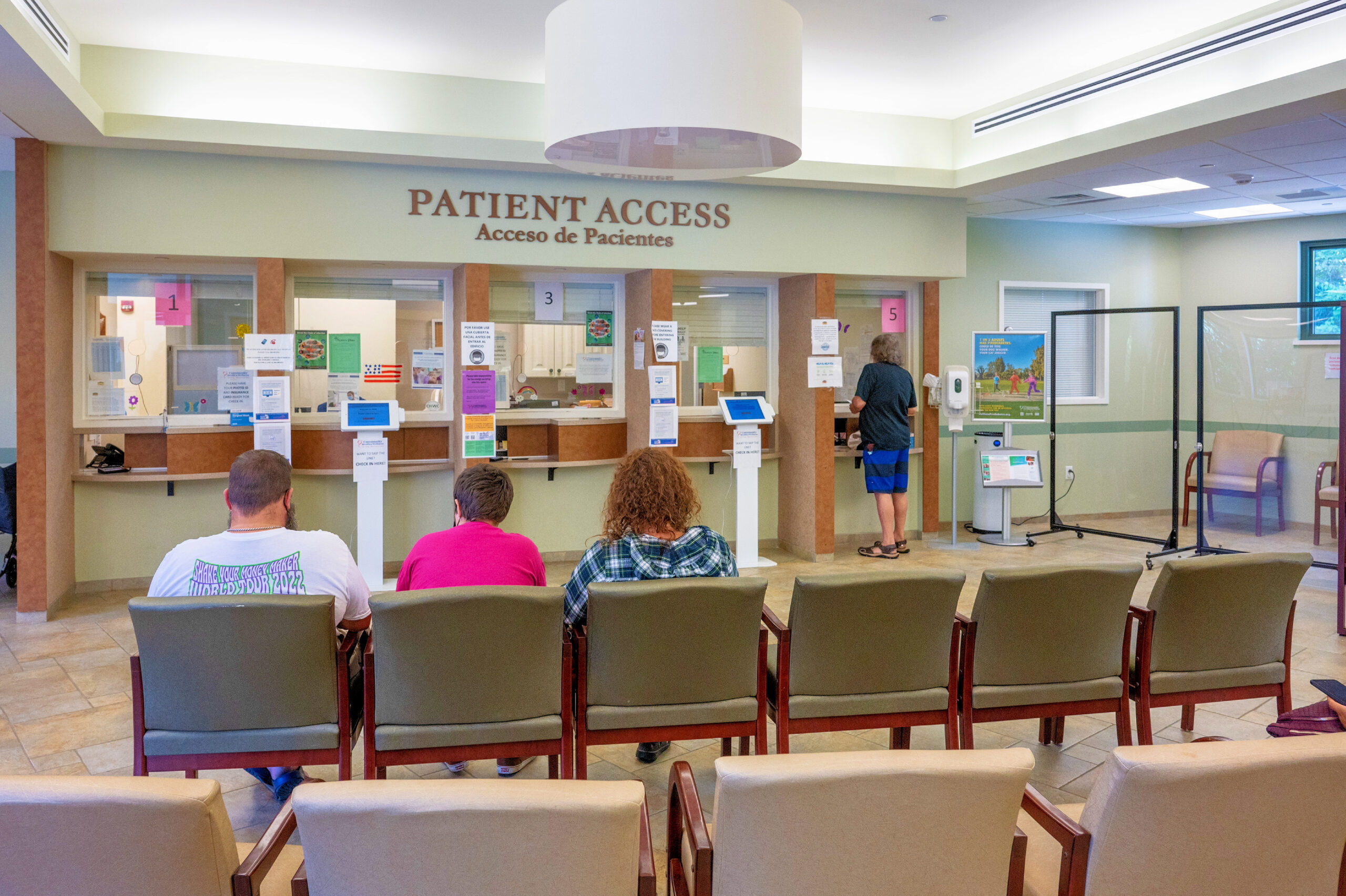
Inside Community Health & Wellness of Greater Torrington. FCH partnered with CH&W to establish a new health center in North Canaan, CT.
Photo by Anne Day.
Community Health & Wellness Center
CHWC serves Northwest Connecticut as the region’s only FQHC, providing comprehensive care regardless of ability to pay.
The Economic Case for Action: Healthcare and economic vitality are deeply interconnected in rural communities. Industries like tourism depend on healthy workforces to thrive, while hospitals themselves serve as major economic anchors – providing jobs and generating economic activity that supports local businesses. When these facilities close, communities face a double blow: reduced healthcare access and significant economic decline.
Recommendations
In order to offset potential losses, Connecticut must:
- Apply for maximum Rural Health Transformation Program funding by December 31, 2025. Connecticut has a narrow window of opportunity to access funds for rural healthcare improvements. This federal funding could be particularly crucial for Northwest Connecticut’s rural communities, which face provider shortages and infrastructure challenges that limit healthcare access compared to more urbanized areas of the state.
- Address lagging reimbursement by increasing State rate to 80% Medicare parity. The 2025-2027 budget allocates only $15 million next fiscal year and $45 million in 2026-2027 to boost Medicaid rates for providers – far less than the $250 million representatives in the state originally proposed. Low Medicaid reimbursement rates particularly impact rural providers who serve higher proportions of Medicaid patients, making it financially difficult to maintain services in underserved areas like Northwest Connecticut.
- Streamline service delivery via regional cross-border coordination of medical licenses – Connecticut is already part of the Interstate Medical Licensure Compact, however Connecticut cannot serve as a ‘State of Principal Licensure’ meaning doctors can’t enter the compact through a Connecticut license. This particularly affects Northwest Connecticut communities, where licensing barriers prevent residents from accessing the broader regional provider network they naturally depend on.
Sources
Federal Policy Analysis
- How Might Federal Medicaid Cuts in the Senate-Passed Reconciliation Bill Affect Rural Areas?
- What Are the Implications of the 2025 Budget Reconciliation Bill for Hospitals?
- A Closer Look at the $50 Billion Rural Health Fund in the New Reconciliation Law
- House Republican Reconciliation Bill Would Harm Rural Households
- One Big Beautiful Bill Law Summary
State Policy Resources
More From Here Briefs
Sep 2025 |
4 min read
Connecticut's recent commitment to increase FQHC Medicaid rates by 40% over three years marks the first across-the-board increase in nearly two decades—but challenges…
Read the story
Sep 2025 |
3 min read
New York's Harlem Valley faces a perfect storm: $8 billion in Medicaid cuts, Essential Plan elimination for 1.6 million residents, and cross-border healthcare…
Read the story
Oct 2025 |
4 min read
As federal policy changes threaten healthcare access across rural America, the Rural Health Transformation Program offers $50 billion to help communities adapt. While…
Read the story
Nov 2025 |
4 min read
After decades of building regional food security infrastructure that connects local farms with families in need, federal cuts threaten to dismantle the systems…
Read the story