Message from Our President and CEO
If I had to describe the focus of our efforts in 2025, it would be that we worked on improving our own capacity to better partner with our grantees in support of their work. Specifically, we found ourselves stretching out of our comfort zone and testing old and new assumptions about our work.
Not just in the sense of doing more but reaching beyond what’s familiar — using our voice in new ways, testing approaches we weren’t sure would work and finding new ways to support our partners during a year that asked a lot of everyone. It wasn’t always comfortable, but I feel it was right.
The policy environment that shaped so much of 2025 pushed us to think carefully about what it means to show up as a genuine partner. For us, that looked different depending on the situation — deepening our commitment to unrestricted, multi-year funding for organizations that needed room to breathe and plan, staff hours alongside grant dollars, and an attempt to make sure that what’s happening in our communities is visible to the people with the power to shape it. We’re still learning what works.
What gives me confidence is the quality of the work happening in this region. The organizations we partner with are creative, committed, and deeply rooted in their communities. The challenges are real, but so is the ingenuity being brought to them — in how affordable housing gets financed, in how small farms find markets, in how local governments build the capacity to serve their residents well.
That we have the flexibility to stretch — to invest in new ideas, test new approaches, and learn alongside our partners — is something we’re genuinely grateful for. We don’t take it lightly.
We’re committed to making the most of what we have — and to practicing, deliberately, the discipline of hope.

Investing in Our Nonprofit Partners for the Long Haul
There’s a persistent gap in how philanthropy tends to work: funders pay for programs, but rarely for the organizations delivering them. Staff capacity, financial systems, strategic planning, leadership development — these are the things that determine whether a nonprofit can sustain its work over time, and they’re exactly what most restricted grants won’t support. FCH’s Multi-Year General Operating Support Program exists because we think that’s worth changing.
Since 2021, we’ve provided unrestricted, multi-year funding to a small cohort of organizations in our region, trusting them to direct dollars toward what they know their organizations need most. In 2025, we made our first grants to a new cohort, twenty-one organizations applied, and we reviewed each through four stages: an initial application, interviews with organizational leadership, a detailed financial analysis, and co-created site visits designed to understand each organization’s strategic tensions and experience their mission firsthand. We extended our commitment from three to five years and moved away from flat grant amounts toward funding calibrated to each organization’s five-year average operating budget.
The 2025–2030 cohort includes Greenwoods Counseling & Referrals, North East Community Center, Project SAGE, and Wassaic Project — representing a total five-year commitment of $2,000,000, with annual grants per organization ranging from $75,000 to $150,000. These organizations were selected for their strong alignment with FCH’s strategic framework, significant presence in our service area, and the organizational conditions needed to support learning and risk-taking.
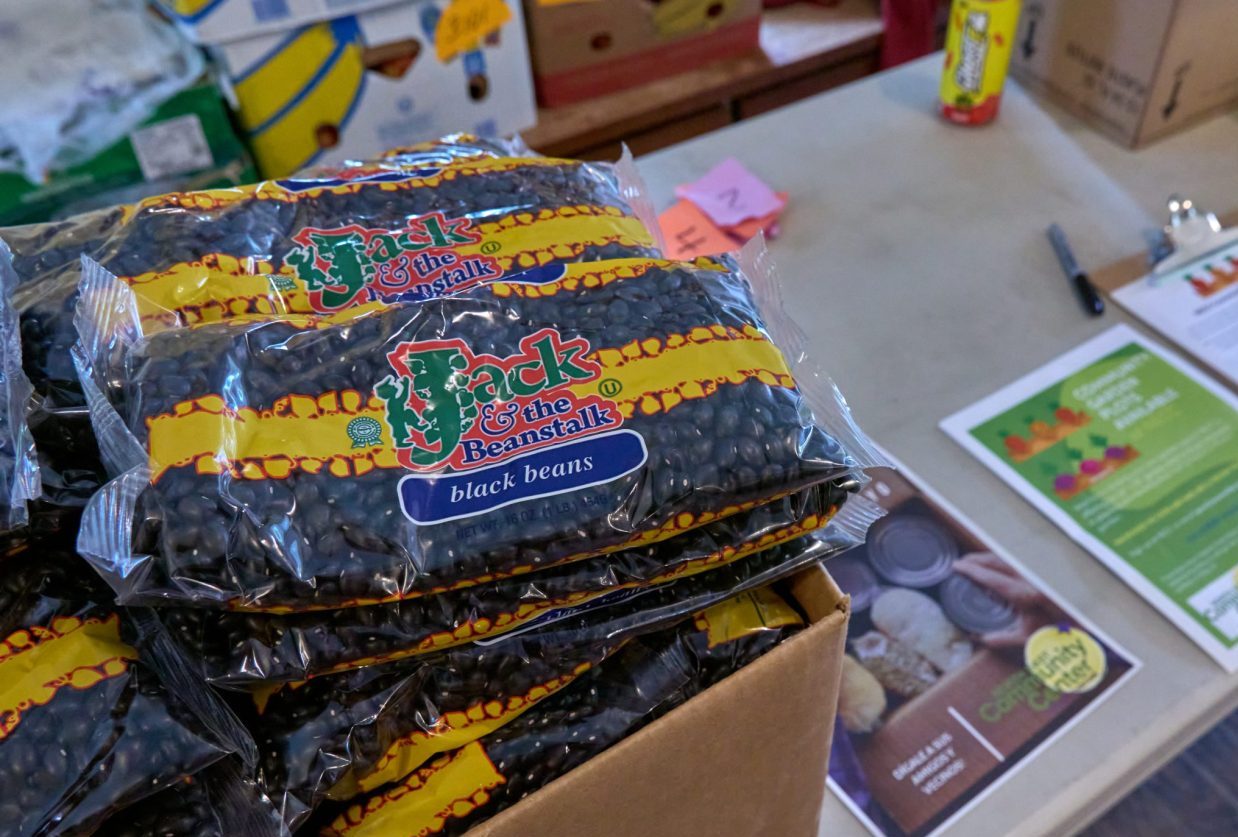
Photo by Walter Hergt.
What We Learned From Our First Multi-Year General Operating Cohort
Between 2021 and 2024, FCH invested $900,000 in three-year general operating support grants to three nonprofits in our New York service area. The results largely confirmed our hypothesis — and surfaced insights that changed how we work.

Your Story Matters
Budget decisions being made right now could impact healthcare access in our region. Policymakers need to hear what’s really at stake — and that starts with stories from the people living it.
If healthcare access affects your daily life, we want to hear from you. You choose what to share and whether to share publicly or anonymously.
Finding Our Voice: FCH Launches A New Storytelling Initiative
Policies are better when the people they affect have a hand in shaping them, and in a small rural region like ours, that takes deliberate effort. FCH has believed for some time that improving health and well-being here requires more than grantmaking. It also requires making sure that the realities of our community are visible to the people with the power to shape them. In 2025, we launched From Here as a direct attempt to do that.
From Here pairs local voices and data to document how state and federal policy decisions are landing in our 17-town region — the providers keeping rural healthcare afloat, the farms and food hubs feeding our neighbors, the nonprofits holding communities together through ongoing uncertainty. In our first year, we published five issue briefs and seven community stories covering federal healthcare legislation and its effects on coverage and provider capacity, and the consequences of federal cuts to the regional food systems our communities depend on.
Building this initiative has been a genuine stretch for a team of four. The design, launch, and early production required significant staff time and external support. We don’t yet have enough evidence to know how much From Here is influencing decision-makers — that kind of impact is slow to materialize. But the urgency of the current policy moment keeps reinforcing why this work matters, and we’re committed to sustaining it thoughtfully.
Explore Community Stories from our From Here Series


Grantee Partner Highlights
35 Grantee Partners
2 Grantee Partners were Towns
4 Grantee Partners were Fiscally Sponsored Initiatives
Average grant made in 2025 was $23,093
28% of nonprofit partners in 2025 were new grantee partners of the foundation.
GRANTS
FCH made $1,142,272 in grants in 2025.
Please note that our Report to the Community is based on unaudited financial information. Grants include those made from Donor Advised Funds held by Northwest Connecticut Community Foundation and the Community Foundations of the Hudson Valley.
Investing in Regional Food Infrastructure
In 2025, FCH made a $1 million place-based investment to support the development of a regional Food Hub in Millerton, New York — our second deployment of capital through our Place-based Investment Policy. The Food Hub will double processing capacity for small regional farms while prioritizing service to food-insecure communities and healthcare institutions. FCH structured its investment as a pass-through loan to Seed Commons, a Community Development Financial Institution providing a line of credit to the project. FCH also provided grant funding to offset the project’s borrowing costs, ensuring this critical infrastructure can move forward without straining current operations.
Stories from Our Region
Ten Homes, Multiple Towns: The Scattered Site Model in Rural Connecticut
Affordable housing in rural communities presents a persistent challenge: the financing systems designed to support it were built for a different scale. Traditional state and federal funding sources — particularly federal tax credits — typically require large, concentrated developments that small towns simply cannot accommodate. Limited infrastructure, small parcel sizes, steep slopes, and wetlands often make large-scale construction impractical, effectively locking local nonprofits out of the major funding streams available to their suburban and urban counterparts.
The Litchfield County Center for Housing Opportunity (LCCHO), an initiative of The Housing Collective, has found an innovative path through this challenge. By coordinating ten home sites across multiple towns as a single project, LCCHO unlocked institutional financing and state grant funding that small-town housing efforts rarely can access. The project also employed modular construction, with home components manufactured off-site before assembly, accelerating timelines while maintaining quality.
LCCHO works alongside the almost entirely volunteer-led local housing nonprofits in Litchfield County — providing day-to-day project management, technical assistance, seed funding, and community engagement support — to develop housing solutions tailored to each town’s unique needs and capacity. To date, LCCHO supports 18 local housing organizations, has allocated $203,000 in pre-development seed funding, helped nonprofits access over $15 million in financing, and has 231 units in the development pipeline across 12 towns.
The short video below — produced with FCH support — highlights the collaborative approach of town-based, volunteer-led nonprofits, elected officials, and regional housing partners, and brings the scattered site model to life.
At a time when median home prices in many Litchfield County towns exceed $700,000 and waiting lists for affordable rentals stretch to hundreds of households, this work is not just about housing — it’s about whether our region can remain a place where people of all incomes can put down roots.
Investing in the Towns that Serve Our Community
Healthy communities depend not just on strong nonprofits and affordable housing, but on local governments with the capacity to plan well, steward resources, and genuinely engage the people they serve. As FCH’s understanding of what it takes to support local decision-making has deepened, so too has our recognition that small rural municipalities — often operating with lean staff and limited budgets — are a critical part of that equation.
In 2025, we made grants to two municipalities in our region that reflect this thinking.
In the Town of Amenia, we supported the Recreation Commission’s first community-engaged planning process in nearly two decades — an effort designed to center resident voices, in shaping the future of local parks and programs. What distinguishes this initiative is Amenia’s commitment to structural change beyond the plan itself. The process will establish replicable structures for ongoing community participation in parks and recreation planning, moving the town from occasional public comment toward a more continuous and inclusive model of resident engagement. The result will equip both staff and commissioners with systems they can build on for years to come.
In the Village of Millerton, we made the first year of a two-year commitment to help a community of 950 residents navigate the demands of stewarding a $9.7 million park revitalization — the largest capital project the Village has ever undertaken. FCH grant funds support a part-time Grants Manager to ensure compliance across multiple complex funding sources, while also producing a grants management handbook that will serve the Village beyond this project. As the Village of Millerton looks ahead to future capital investments, including a planned wastewater system, the capacity built through this work will make those efforts more achievable.
Both investments are rooted in the same belief: when local governments are better equipped to plan, lead, and engage their communities, the whole region is better positioned to thrive.
Inside FCH
Financials
*FCH receives an annual distribution from two externally held trusts.
**FCH has two donor advised funds held by the Community Foundations of the Hudson Valley and Northwest Connecticut Community Foundation.
***Grants awarded include $203,344 (2025) and $181,000 (2024) in grants made from the aforementioned Donor Advised Funds, remaining grants were made from FCH Owned Assets.
Putting $60K in Program Dollars to Work
Beyond grantmaking, FCH sometimes takes on programmatic work directly — paying vendors for communications, events, or publications in ways that can’t be structured as a grant. In recent years, these dollars primarily supported our Nonprofit Community of Practice (CoP). In 2025, that balance shifted: for the first time, spending tied to our Support Local Decision-Making focus area outpaced our CoP, with the majority going toward developing and launching From Here, our storytelling initiative, and a portion supporting operations for LCCHO’s annual Housing Summit. Total program spending in 2025 was $60K.
Board and Staff
Our small and nimble team cares deeply about our region and endeavors to be adaptive to its needs. Our board members live and/or work in the rural 17-town region FCH shares.
Board of Directors
As of December 31, 2025.
Rev. AJ Stack, Chair
Jill Fieldstein, Treasurer
Edith Greenwood, Vice-Chair
Ceely Ackerman, Secretary
Richard Berry
Katty Brennan
Allison Canton
Ben Freund
Peter Halle
Rev. Dr. D. Elizabeth Mauro
Dr. Zach McClain
Dr. Caroline Salas-Humara
Staff
Sarah Allyn, Program Lead
Cathy Glasner, Operations Lead
Nancy Heaton, President & Chief Executive Officer
Natashea Winters, Director of Programs & Learning
About this Report
At FCH, we uphold transparency and accountability by publishing our Report to the Community, which shares our activities, financial performance, and stories from our region. By providing detailed insights into our work and impact, we aim to foster trust, invite feedback, and demonstrate our commitment to our mission. We encourage you to explore this report and our previous annual reports to understand our work, progress, and how we allocate resources for positive change.
Board Leadership Changes in 2025
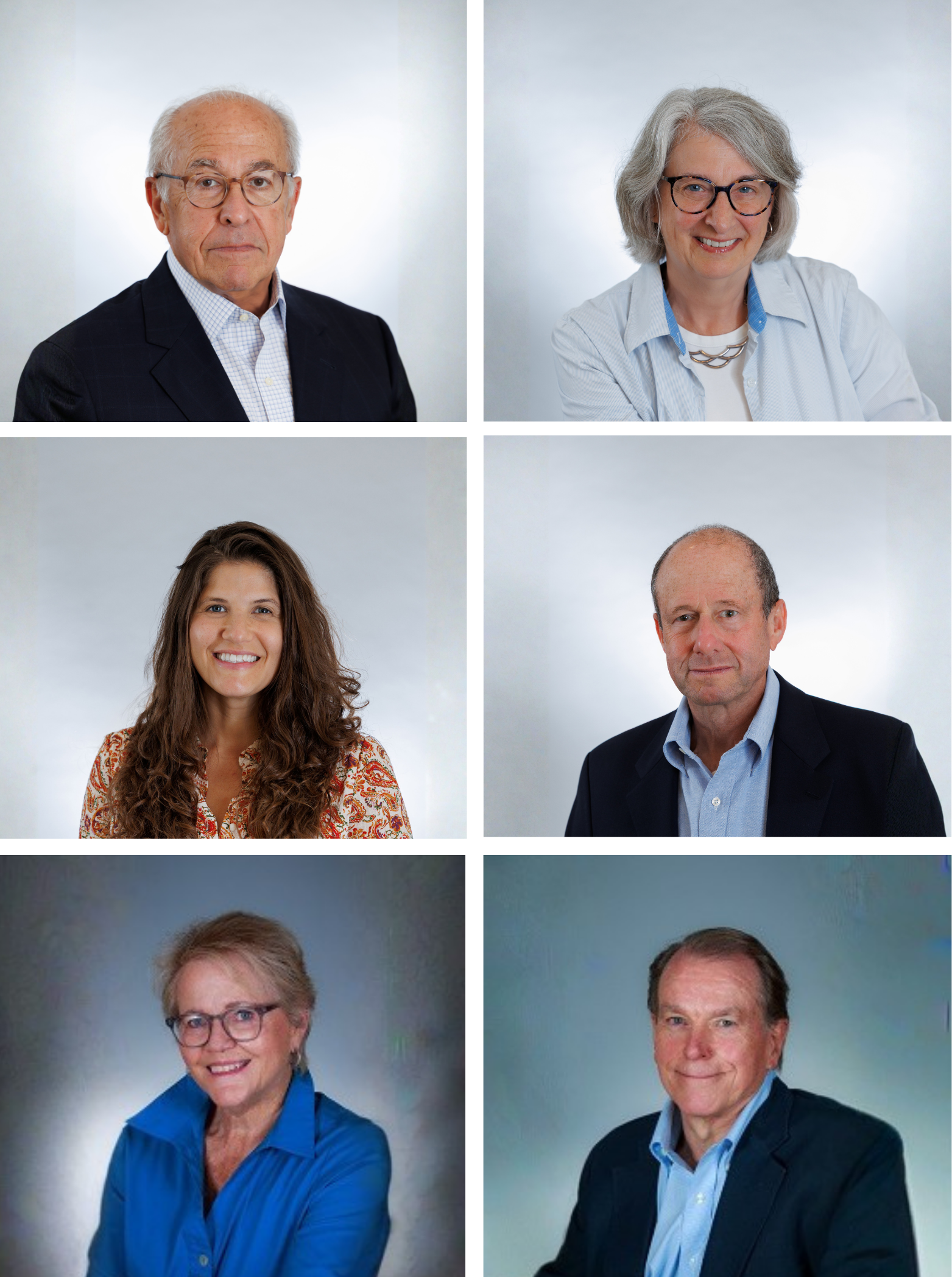
2025 brought significant transitions in FCH’s board leadership. In June, AJ Stack became Board Chair and Jill Fieldstein became Treasurer. We welcomed four new members during the year: Richard Berry and Betsey Mauro in March, and Allison Canton and Ben Freund in June. The year also brought two departures we mark with deep gratitude. Hila Richardson served for 9 years, including 6 years on the Governance Committee, and we are grateful for her thoughtful presence and counsel throughout her tenure. Tom Quinn’s departure marks the end of a significant chapter for FCH. Over his 11 years of service, Tom held leadership roles for nearly his entire tenure — first as Treasurer and then as Board Chair — bringing financial rigor and a deep commitment to our region. His steady hand during a period of meaningful growth and change at FCH leaves a lasting imprint on how we work. We are enormously grateful for his years of leadership and wish him well.