MORE than Food on the Table
At Comida de Vida, access meets dignity. After 17 years of building a just food system, federal cuts are testing that vision.
The Rev. AJ Stack
Executive Director, Food of Life/Comida de Vida Pantry
The Food of Life/Comida de Vida food pantry arose from a shared belief that access to healthy food is a universal human right. After 17 years in operation, the organization’s mission of partnering to create a fair and just food system in our region is at risk due to $500 million being slashed from The Emergency Food Assistance Program (TEFAP).
“We have seen a drastic reduction—and in some cases, complete elimination—of all sorts of quality food items that used to be readily available at low or no cost to us,” says Executive Director Rev. AJ Stack, a staunch advocate for local food access.
While the regional food bank system is doing its best to adapt, protein was the first staple to become severely limited in the wake of drastic and unexpected cuts to USDA programs—further complicating the partial-choice pantry’s goal of providing clients with a variety of culturally appropriate food.
“While it is true that food is food, each of us has a cultural milieu in which we grew up— one that informs how we feed ourselves and our families,” says Stack, who believes that removing consideration of this fact from the conversation dehumanizes the very folks he seeks to serve. On average, this equates to over 700 people a week—and the numbers continue to climb as folks travel to the Amenia-based pantry from both sides of the Connecticut-New York border.
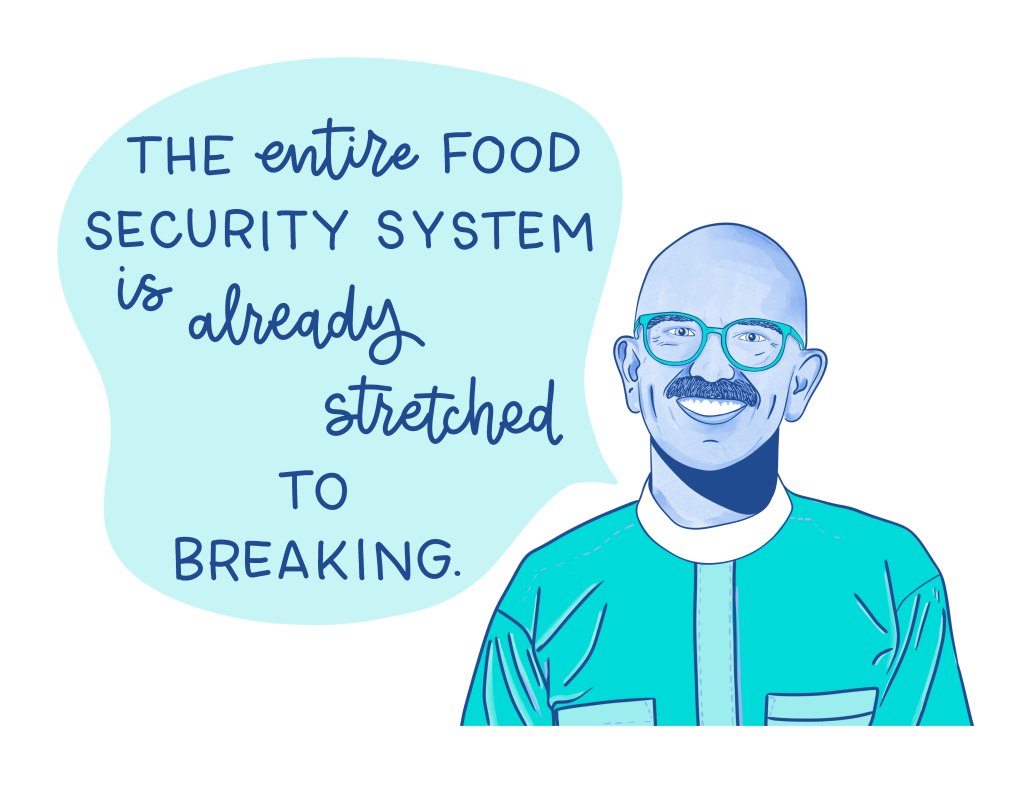
“The entire food security system is already stretched to breaking,” says Stack, who is fearful of what this means for neighbors who rely on the network that includes Comida de Vida to feed their families. “Make no mistake: the vast chasm between the haves and the have-nots is growing.”
Illustration by Michelle Newman.
More Local Voices