Key Points
-
Northern Dutchess Paramedics (NDP), the paramedic service for towns on both sides of the New York–Connecticut line for nearly 30 years, was bought in October 2025 by Empress EMS, part of a private-equity-owned ambulance company that was itself sold to a new private equity firm in January 2026
-
In New York, North East’s ambulance contract nearly doubles between 2024 and 2027, and the town overrode the state’s 2% property tax cap to pay for it
-
In Connecticut, Sharon Hospital ended its 28-year sponsorship of NDP in December 2025 with less than three weeks’ notice. Without a sponsor, NDP could no longer provide paramedic care in Connecticut after January 1, and the hospital’s fallback plan was a single paramedic for its entire service area. NDP found a new sponsor and kept operating
-
The two states’ problems share the same roots: too few calls to cover round-the-clock costs, ownership decisions made outside the region, and state laws that leave EMS largely to individual towns
Share
Help spread awareness about how national private-equity consolidation has changed 911 ambulance response across Northwest Connecticut and the Harlem Valley – and what it means for small towns.


How Ambulance Care Works Here
When someone calls 911 here, local ambulance squads, many of them volunteer, provide basic care and transport. For heart attacks, strokes, and other serious emergencies, a paramedic provides advanced life support (ALS): heart monitoring, IV medications, and other hospital-level care at the scene. Small towns don’t have enough calls to employ their own paramedics, so they share a regional provider. For nearly 30 years, that provider on both sides of the state line was Northern Dutchess Paramedics (NDP), a locally founded company based in Rhinebeck.
The two states arrange this coverage differently. In Connecticut, paramedics must work under a “sponsor hospital,” and NDP’s sponsor was Sharon Hospital for 28 years. In New York, there is no state system for paramedic coverage; each town arranges its own, usually by contracting with a provider. For North East, Amenia, and Dover, that provider has been NDP, now part of Empress.
A Rollup Reaches Our Region
What is a “rollup”?
Private equity firms buy companies with investor money and borrowed funds, aiming to sell them later at a profit. A rollup is a common private equity strategy: buy many small, independent companies in one industry, combine them, and resell the larger company. Rollups have reached ambulance services, physician practices, and veterinary clinics.
In October 2025, NDP was bought by Empress EMS, a Yonkers company owned by PatientCare EMS Solutions, which has grown by acquiring ambulance services. In January 2026, PatientCare’s private equity owner, A+M Capital Partners of Greenwich, sold it to Grant Avenue Capital, which announced plans for “expansion in existing markets and entry into new markets, including through add-on acquisitions.” (Grant Avenue Capital announcement via BusinessWire.) Neither sale needed approval from the towns NDP serves.
Hospitals were consolidating too. In 2025, Sharon Hospital became part of Northwell Health, a 28-hospital system based on Long Island. By the end of the year, both partners behind paramedic coverage in the Northwest Corner were owned by large organizations based outside the region.
New York: Rising Costs
North East had 256 EMS calls in 2023, fewer than one a day, but must pay for a paramedic around the clock. That is the core problem of rural EMS: high fixed costs and too few calls to spread them across.
When North East’s last contract with NDP expired in 2024, NDP proposed a 71.5% increase. The town negotiated it down, but costs still rise from $376,858 in 2024 to $746,345 in 2027, nearly double. To pay for it, the town overrode New York’s 2% property tax cap for 2026. A bill letting towns fund EMS outside the cap passed the legislature in 2025 but was vetoed by Governor Hochul.
That contract was negotiated before the Empress purchase. The next one, after 2027, will be negotiated with the new owners, at a time when Empress is the main paramedic provider across nearly all of Dutchess County and towns have few alternatives. Rural residents already wait longer for help: in early 2025, the most urgent calls took about 8 minutes on average countywide, but 10 to 12 minutes in North East, Amenia, and Dover.
Towns are also looking for ways to share the load. In October 2026, four northeastern Dutchess County communities, including North East, Amenia, and Stanford, began exploring a regional model with support from county legislators. Instead of each town paying for its own dedicated ambulance, three shared ambulances would move across the participating towns as calls come in, with Empress remaining the commercial provider. “Sometimes our ambulances are setting there for three or four days without a call,” said Stanford Supervisor Julia Descoteaux, who estimates the shared model could cut EMS costs by about 20%. County Legislator Chris Drago said the long-term goal is for the county to “play more of a role” and be less “reliant on private companies.” (Millerton News) The plan is still in its early stages.
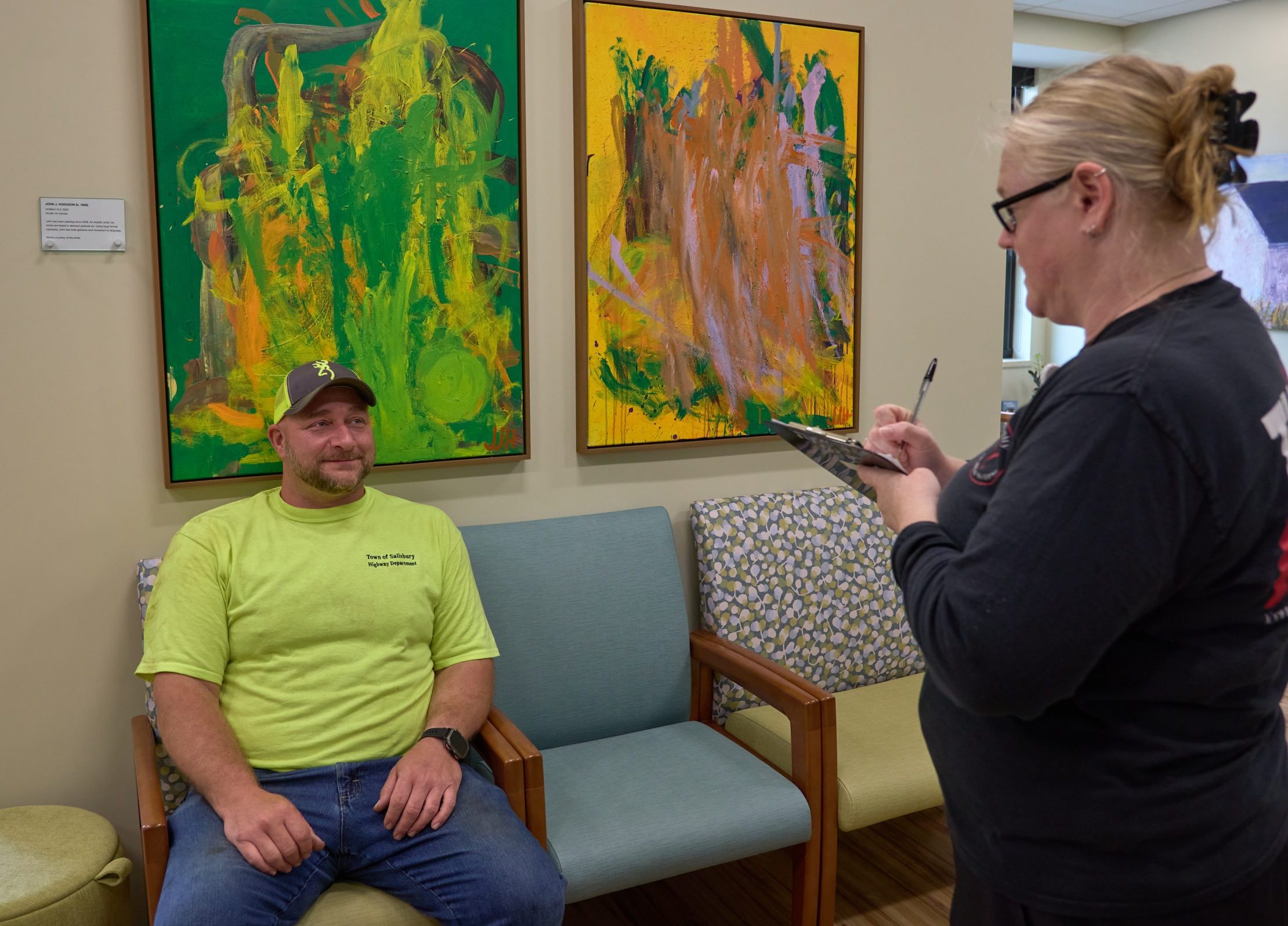
A patient checks in at Community Health & Wellness’s North Canaan Health Center, which grew to serve more than 1,600 patients across 7,600 visits in 2025 — nearly triple its opening-year volume. FCH’s investment in North Canaan reflects over a decade of partnership with CH&W to expand access to care in a historically underserved community.
Photo by Walter Hergt.
The Subsidy Cliff Comes Home
Gaps in emergency medical services follow similar patterns in Medicaid, the Essential Plan, and marketplace coverage. Learn more about the challenges with one company serving Connecticut and New York as the subsidy cliff returns to our region.
Connecticut: A Sudden Gap
NDP found a new sponsor, Stamford Hospital, and kept taking calls; it now operates alongside Sharon Hospital’s own paramedic service. But the episode showed how much the region’s coverage can hinge on one hospital’s decision. Response times here are long too: in 2024, Cornwall and Washington averaged nearly 17 minutes, among the slowest in the state.
On December 11, 2025, two months after the Empress purchase, Northwest Corner towns learned that Sharon Hospital would end its sponsorship of NDP on January 1, saying “concerns were brought to our attention about compliance and [a lack of] communications.” Without a sponsor, NDP could not provide paramedic care in Connecticut. The hospital’s replacement plan was a single paramedic covering its service area, starting each shift in New Milford. “This is the most important thing in town … It has to be done well,” said Cornwall First Selectman Gordon Ridgway. (Hospital statement and Ridgway quote via Lakeville Journal.)
“This is the most important thing in town … It has to be done well…”
GORDON RIDGWAY, CORNWALL FIRST SELECTMAN
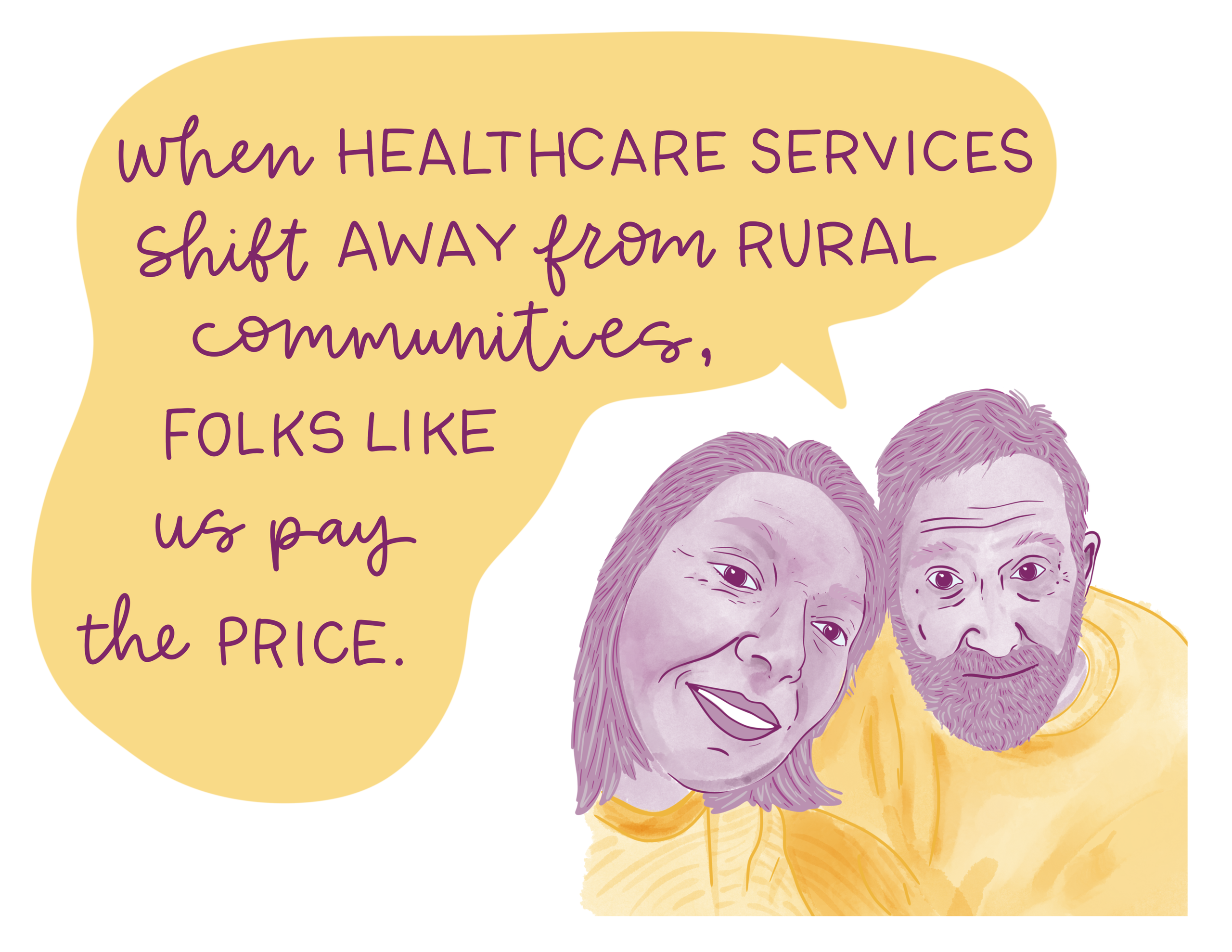
Community Voices

Different Problems, Same Roots
| Root cause | Connecticut | New York |
| Few calls, high fixed costs | Paramedic coverage relies on a few providers, each of which needs a sponsor hospital | North East’s costs nearly double for fewer than one call a day |
| Decisions made elsewhere | A health system based on Long Island ended a 28-year partnership on short notice | NDP changed owners twice in about three months, with no local approval |
| EMS not treated as essential | Towns must plan for EMS, but the state does not classify it as an essential service | The state does not require towns to plan for EMS, and a tax cap exemption was vetoed |
Because one company serves both states, events on one side of the border affect the other: the sale of a New York company changed who owns the paramedic service Connecticut towns rely on, yet each state handles EMS planning on its own. Earlier briefs in this series, H.R.1’s Impact on the Harlem Valley and The Subsidy Cliff Comes Home, found the same problem in Medicaid, the Essential Plan, and marketplace coverage: people here live, work, and get care in both states, but each state’s programs and rules stop at the state line.
Recommendations
State and local partners should:
Require advance notice of ownership changes in essential local services, so towns have time to plan and negotiate before changes take effect.
Treat EMS as an essential service. Connecticut should classify it as one, and New York should require local EMS planning and help towns fund it.
Support alternatives, with real municipal input. Shared regional models lie the one northern Dutchess towns are now exploring, along with Northwell’s proposed public-private paramedic partnership, could give towns more options. County and state support can help get them started, as long as towns keep a binding say in how they work.
Give towns room to pay for EMS. New York lawmakers should revisit the vetoed property tax cap exemption for EMS, or create another way for towns to fund it.
Sources
Regional Reporting
- Millerton News: Millerton, Amenia and Dover Face ‘EMS Crisis’ as Costs Rise Statewide (Oct 2024)
- Millerton News: North East Unveils New Ambulance Services Contract (Dec 2024)
- Millerton News: North East 2026 Budget – EMS Costs Jump 36% (Nov 2025)
- Millerton News: As EMS Costs Continue to Rise, Dutchess County Looks for Answers (June 2026)
- Lakeville Journal: Sharon Hospital Drops Northern Dutchess Paramedics as Ambulance Provider (Dec 2025)
- Millerton News: Northern Dutchess Paramedics Remains in Service Amid Changes at Sharon Hospital (Jan 2026)
- New Pine Plains Herald: Latest Dutchess County EMS Data Confirms Rural Towns Still Waiting (Aug 2025)
- Millerton News: Dutchess County Towns Explore Regional EMS Coverage Model (Oct 2026)
State Policy and Data
- CT Mirror: EMS Providers Are Not Considered an “Essential Service” Under Connecticut Law (Mar 2024)
- Connecticut General Statutes § 19a-181b: Local Emergency Medical Services Plan
- Hartford Courant via EMS1: Report Finds Conn. EMS Response Times Lag in Suburbs and Rural Towns (Dec 2025)
- Dutchess County EMS Countywide Quarterly Data Report, Q2 2025 (PDF)
- NY State Senate: S1515 – Exempts EMS Expenditures from the Property Tax Cap (vetoed Dec 2025)
Corporate Ownership
- Lakeville Journal: Empress EMS to Purchase Northern Dutchess Paramedics (Aug 2025)
- BusinessWire: Grant Avenue Capital Acquires PatientCare EMS Solutions (Jan 2026)
- A+M Capital: PatientCare EMS Solutions Acquires Empress Ambulance Service (2019)
- Hartford Business Journal: Nuvance Health Completes Merger with Northwell Health (2025)
More From Here Briefs
Sep 2026 |
4 min read
The hard income cliff is back. For 2027 coverage, marketplaces will apply the 2026 federal poverty guidelines starting in November 2026, putting the…
Read the story
Sep 2025 |
4 min read
Connecticut's recent commitment to increase FQHC Medicaid rates by 40% over three years marks the first across-the-board increase in nearly two decades—but challenges…
Read the story
Sep 2025 |
3 min read
After decades of building healthcare infrastructure in Northwest Connecticut, federal legislation threatens to undermine progress that brought essential services to rural communities. The…
Read the story