Facing an Emergency WITHOUT an Available Ambulance
A routine heart test at Sharon Hospital ended with an emergency flight to Poughkeepsie, and a new understanding of what gaps in rural EMS mean for patients.
Distance to care routinely affects decisions Ann and Greg Bidou make about when—and if—to seek medical help. While the long-time residents of Falls Village love where they live, residing in the Northwest Corner comes with unique challenges related to healthcare access. While travel time alone ranks among their primary concerns, a bigger challenge emerged when Greg was referred for a routine echocardiogram at Sharon Hospital following his annual physical. When the test revealed he needed an emergency pacemaker, he was referred to Poughkeepsie for surgery. When no ambulance was available to transport him, Greg was airlifted to Vassar Brothers Medical Center, 43 miles from home. The unexpected flight came with a $1,600 bill, multiple long-haul trips for follow-up care, and a sobering perspective on the current state of emergency services.
“We were told there would not be an ambulance available for many hours,” recalls Ann of the harrowing experience, one that arose following the sudden termination of Sharon Hospital’s 28-year agreement with Northern Dutchess Paramedics. This abrupt operational shift created coverage gaps, leaving patients facing, hours-long delays for available ambulances amidst a severe shortage of emergency transport options.
“You don’t shut down one service while negotiating another without overlap,” says Greg, underscoring the need for seamless transitions in care. His experience reflects a broader national trend: as corporate healthcare systems consolidate services in more profitable urban hubs, rural communities lose resources, creating medical deserts where geography can ultimately dictate a patient’s chance of survival.
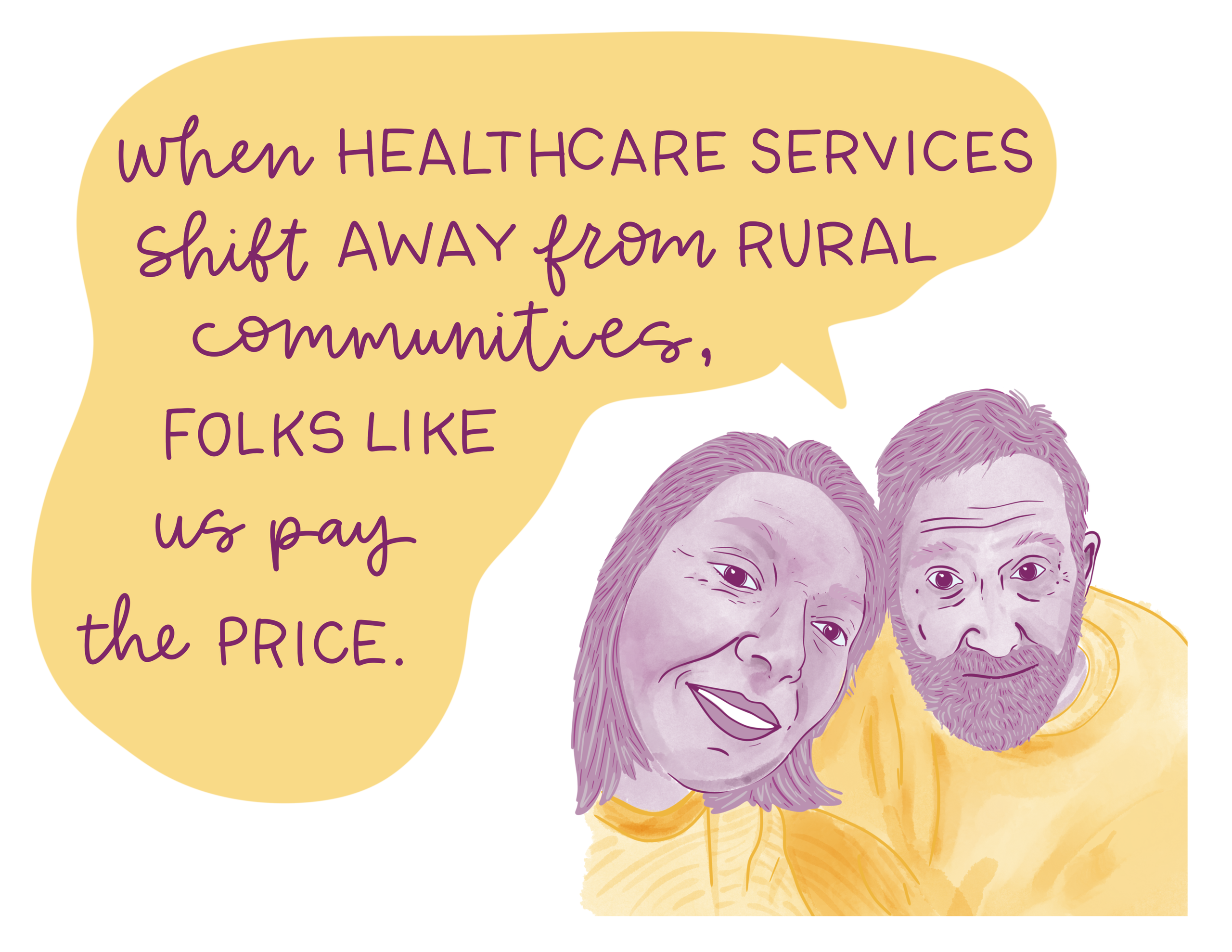
“When healthcare services shift away from rural communities, folks like us pay the price,” says Greg, pointing to the risks he and his neighbors face when local access to care is reduced. The shift, most often driven by economics, impacts rural residents by increasing travel burdens that cause delays in treatment and lower overall health outcomes.
Ann understands the dangers associated with centralizing services and makes an excellent point: A local cardiologist at Sharon Hospital or nearby, who could have performed Greg’s pacemaker procedure locally, would have rendered their emergency services crisis moot.
Emergencies aside, limited after-hours and weekend availability coupled with booked-out schedules often force rural residents like the Bidous to remain flexible when seeking primary care as well.
While Greg has been with his doctor for 25 years, Ann has been through four different general practitioners and a trio of OB/GYNS since relocating from Trumbull. While starting over can be a drag, she recently connected with a doctor she really likes but whose location presents another challenge.
“She happens to practice just over the state line, in Millerton [New York],” says Ann, underscoring the added worry of whether or not her insurance will cover the cost associated with receiving out-of-state albeit local care.
Specialists, like Greg’s neurologist, come and go.
“We [recently] lost a local neurologist who has not been replaced,” says Ann, evidence of another trend that limits patients’ ability to build trust and continuity of care which, for many, ranks among their top priorities.
When it comes to the top-notch care like her husband received in Poughkeepsie, Ann speaks for her neighbors when she says: “We just wish it was a little bit closer and more accessible.”
Illustration by Michelle Newman.
More Local Voices