Key Points
-
Food insecurity is widespread and its getting worse. About 14% of Connecticut residents are food insecure–a 40% jump since 2020. With SNAP cuts impacting 40 million people, need is growing as support shrinks.
-
Access to fresh, nutrient-dense food at pantries is shrinking. The $500 million TEFAP cut and $1 billion LFPA elimination have severed farm-to-pantry supply chains that provided fresh, local produce to communities in need.
-
The viability of small farmers and food producers is at risk. Small farms built business models around serving food-insecure communities. With these reliable markets disappearing overnight, both farm survival and local agricultural economies are threatened.
-
The loss of data makes the crisis harder to track and solve. Without annual food security reports, measuring the impact becomes nearly impossible–undermining our ability to identify needs and ensure evidence-based policy.
Share
Help spread awareness about how federal food program cuts threaten our region’s farms, pantries, and families—and what states can do to protect local food security.


A Historic Shift in Federal Food Programs
Food security and strong local food systems go hand in hand.
The very first government food assistance program—launched during the Great Depression—grew out of a simple but powerful idea: to use farmers’ surplus crops to help low-income families put food on the table. Ever since, small farmers have played a vital role in strengthening our food supply and feeding the community.
Recent developments are changing that landscape. In just the past year, major cuts to federal food programs have included:
- $1 billion in funding cancelled for local food purchasing through the Local Food for Schools (LFS) and Local Food Purchase Assistance (LFPA) programs
- $500 million cut from The Emergency Food Assistance Program (TEFAP)
- And a projected $187 billion reduction to the Supplemental Nutrition Assistance Program (SNAP) by 2034
“Farmers are losing stable markets for their crops. Food pantries are scrambling to offer fresh, nutritious options. And communities are losing access to healthy, locally grown food—and the people who produce it.”
Since 1964, SNAP has been one of the country’s most important safety nets, helping around 40 million people each month afford groceries.
Each of these cuts is significant on its own—but together, they point to a troubling trend. As economic insecurity grows, more families are expected to need help. And it’s not just SNAP or ALICE-eligible households (those earning just above the poverty line but still struggling to cover basic costs) who will feel the squeeze.
Farmers are losing stable markets for their crops. Food pantries are scrambling to offer fresh, nutritious options. And communities are losing access to healthy, locally grown food—and the people who produce it.
Food Insecurity Increases as Farm-to-Pantry Funding Ends
When funding for food access changes, it ripples through the entire community.
In Connecticut, cuts to SNAP are expected to hit harder than anywhere else. Right now, about 14% of residents in the state are food insecure — that’s a 40% jump since 2020. Just across the border, 11.5% of people in Columbia County, NY face food insecurity, and in Dutchess County, that number jumps to 24%.
With families already struggling to afford healthy food, recent policy shifts make things even harder. Major changes to SNAP don’t just impact households—they pull money out of local economies and threaten the survival of small farms and food producers who rely on those dollars.
For six decades, SNAP has served as a cornerstone of the nation’s safety net. But new federal decisions are reshaping that system in unprecedented ways. Entire groups—including asylum seekers and refugees—could lose access to benefits altogether. Meanwhile, expanded work requirements and the removal of long-standing exemptions for caregivers, veterans, and others will penalize working people by cutting them off from essential support.
When federal funding disappears, states are left to pick up the tab—often without enough time or resources to do it. That means more people will be pushed toward food pantries, many of which are already operating beyond capacity.
For the first time in the program’s 61-year history, states will soon have to help pay for SNAP benefits. Beginning in FY2028, their share of the cost will be tied to “error rates”—even when those errors come from rushed rollouts or unclear USDA guidance. Some states could end up covering as much as 15% of benefit costs.
These shifts don’t happen in isolation. They affect:
- Local farms and food hubs, whose stability depends on steady funding and reliable markets.
- Community food pantries, which count on partnerships with regional farms to provide fresh, local food.
- Consumers, whose access to nutrient-rich produce is shrinking as the regional food supply becomes more fragile.
- Small farmers, who take pride in feeding their communities and are essential to local food security.
Community Voices

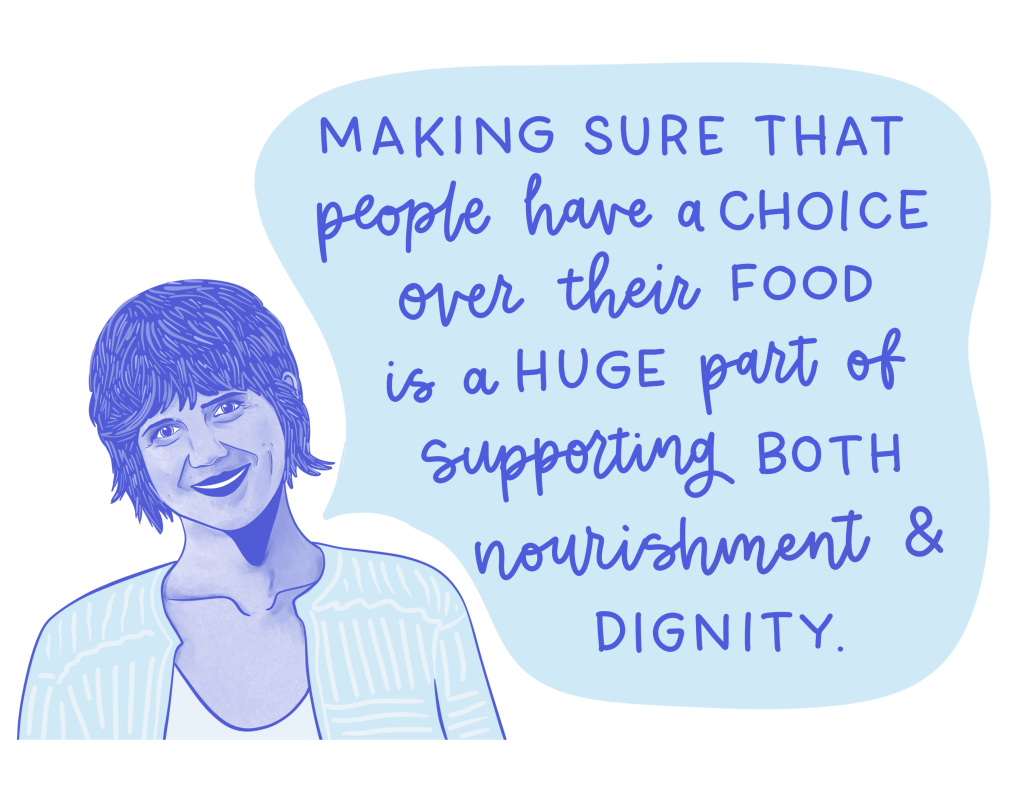


Economic Impact Beyond the Food System
Economic Effects Ripple Beyond Hunger: SNAP generates local economic activity to the tune of $1.80 for every dollar spent. Cuts to SNAP directly impact the small businesses, food producers, and rural economies that rely on this spending. Every $1 cut in SNAP funding results in $14-20 in long-term costs to society spanning increased healthcare expenses and reduced educational outcomes to lost economic productivity.
Rural Communities Bear Disproportionate Burden: More than 20% of food distributed by food banks across the nation is purchased using TEFAP, a percentage that rises significantly in rural communities. In a region where donations are declining and distribution costs are rising, community-based food pantries and programs face the steepest challenge when it comes to replacing lost federal funds.
Local Agriculture Loses Critical Market: Reliable markets for regional farmers to provide fresh, nutrient-dense produce to pantries were created in large part due to the LFPA Program. Its elimination threatens the economic viability of those small farms whose business models hinge on serving food-insecure communities; it simultaneously disrupts both the local agricultural economy and the charitable food system.
Responsiveness of Social Safety Net Lags: Since its inception, 100% of SNAP benefits have been paid by the federal government. For the first time in its 61-year history, states will pay 5-15% of SNAP benefit costs starting in 2028. This fundamental change shifts SNAP from an economic stabilizer to a program at risk of being cut in times of economic crisis, further threatening the program’s ability to respond when need is highest.

Long Table Harvest, grantee partner in FCH’s Capacity Building Grant Program. General Operating Support enabled LTH to purchase food to supplement its gleaning program, which had a stabilizing effect for the organization.
Photo by Anne Day.
Health & Nutrition Security
Nutrition security—consistent access to foods that promote well-being and prevent disease—is a critical social determinant of health. Communities can address this challenge by screening for food insecurity in healthcare settings, engaging community partners like food pantries and schools, and ensuring access to culturally appropriate foods.
Recommendations
Use State Budget Surpluses to Backfill SNAP Cuts: In Connecticut and New York, surplus funds (to the tune of $2.5 and $2.34 billion respectively) must be proactively committed to prevent SNAP benefit reductions and cover increased administrative costs. By the numbers, Connecticut already pays $885 million annually in SNAP benefits; New York faces up to $2.1 billion in new SNAP costs due to federal cost shifting. State-level investment now stands to prevent greater costs associated with healthcare, education, and social services in the future.
Provide Emergency Funding to Food Banks and Pantries: As demand surges across the region, direct state grants are poised to help food banks purchase food and maintain capacity. Given the $500 million TEFAP cut, which represents a 40% reduction in funds for some food banks, states need to step up: Connecticut food banks are requesting an increase in state investment from $900,000 to $10 million. Feeding New York State is requesting $75 million to fully fund a pair of statewide hunger relief programs.
Restore and Expand State Food-Purchase Programs: Offset the $500 million LFPA elimination by maintaining and increasing funding for programs like Nourish New York that simultaneously support local agriculture and provide fresh, nutritious food to emergency food providers.
Invest in SNAP Outreach and Administrative Capacity: With an estimated 20,000 Connecticut residents at risk of losing SNAP benefits under new work requirements, now is the time to tap community-based organizations for administrative support. Amidst dramatically increased workloads and inadequate preparation time to address them, social services departments face undue pressure; funding additional staff and resources to provide application assistance and prevent eligible residents from losing benefits is a proactive investment in our community.
Establish Regional Food Security Councils: In the absence of annual household food security reports from the USDA, states must begin collecting data to track food insecurity and measure program effectiveness. Convening stakeholders for the purpose of identifying root causes and recommending solutions—using Dutchess County’s Food Security Council as a model—is a viable way to fill the gap.
Resources
Federal Policy Analysis
- Center on Budget and Policy Priorities: By the Numbers: Harmful Republican Megabill Takes Food Assistance Away From Millions of People
- Urban Institute: How the Senate Budget Reconciliation SNAP Proposals Will Affect Families in Every US State
- Urban Institute: Cuts to SNAP in the One Big Beautiful Bill Act Would Widen the Persistent Gap between Benefits and Food Costs
- Brookings Institution: SNAP Cuts in the One Big Beautiful Bill Act Will Significantly Impair Recession Response
- Congressional Budget Office: Budgetary Effects of H.R. 1, the One Big Beautiful Bill Act of 2025
- USDA Food and Nutrition Service: SNAP Provisions of the One Big Beautiful Bill Act of 2025
Connecticut State Analysis and Data
- DataHaven: Food Assistance and Local Economies at Risk: Projected Federal SNAP Cuts by Connecticut Town and District
- Connecticut Commission on Women, Children, Seniors, Equity and Opportunity: Food Insecurity in Connecticut Report 2024
- Connecticut Foodshare: Hunger in CT Statistics
- CT Mirror: Proposed SNAP Rules Could Lead to Benefit or Eligibility Cuts in CT
- CT Insider: Report: Food Insecurity in Connecticut Up 40% Since COVID
- UConn Today: How Will Cuts to SNAP Funding Impact Connecticut?
New York State Analysis and Data
- New York State Comptroller: DiNapoli: More New Yorkers Facing Food Insecurity
- New York State Comptroller: Proposed Congressional Cuts to SNAP Program Mean More New Yorkers Without Enough Food
- Governor Hochul: By the Numbers: The Devastating Impact on Food Security Throughout New York State
- New York Focus: Congress Passed Trump’s ‘Big Beautiful Bill,’ Gutting New York’s Safety Net
- New York State Council on Hunger and Food Policy: 2024 Annual Report
- New York Health Foundation: Hunger on the Rise: New York’s Food Insufficiency Rates
Food Security Research and Policy
- Feeding America: Map the Meal Gap 2024
- Center on Poverty and Social Policy at Columbia University: Economic Costs of Cutting SNAP
- Association of Health Care Journalists: Covering Cuts to SNAP, WIC After USDA Ends Food Security Reports
- Food Bank News: Seven Takeaways on the Federal Funding Cuts
Regional Food Security Organizations
- End Hunger CT!
- Feeding New York State
- Hunger Solutions New York
- Food Bank of the Hudson Valley
- Connecticut Food Bank
- Connecticut Foodshare
- Dutchess County: Food Security Council
Federal Nutrition Program Information
- USDA Food and Nutrition Service: Supplemental Nutrition Assistance Program (SNAP)
- USDA Food and Nutrition Service: The Emergency Food Assistance Program (TEFAP)
More From Here Briefs
Oct 2025 |
4 min read
As federal policy changes threaten healthcare access across rural America, the Rural Health Transformation Program offers $50 billion to help communities adapt. While…
Read the story
Sep 2025 |
3 min read
New York's Harlem Valley faces a perfect storm: $8 billion in Medicaid cuts, Essential Plan elimination for 1.6 million residents, and cross-border healthcare…
Read the story
Sep 2025 |
3 min read
After decades of building healthcare infrastructure in Northwest Connecticut, federal legislation threatens to undermine progress that brought essential services to rural communities. The…
Read the story
Sep 2025 |
4 min read
Connecticut's recent commitment to increase FQHC Medicaid rates by 40% over three years marks the first across-the-board increase in nearly two decades—but challenges…
Read the story